Where the icebreakers of the future meet 50 years of experience
News 2026-11-26
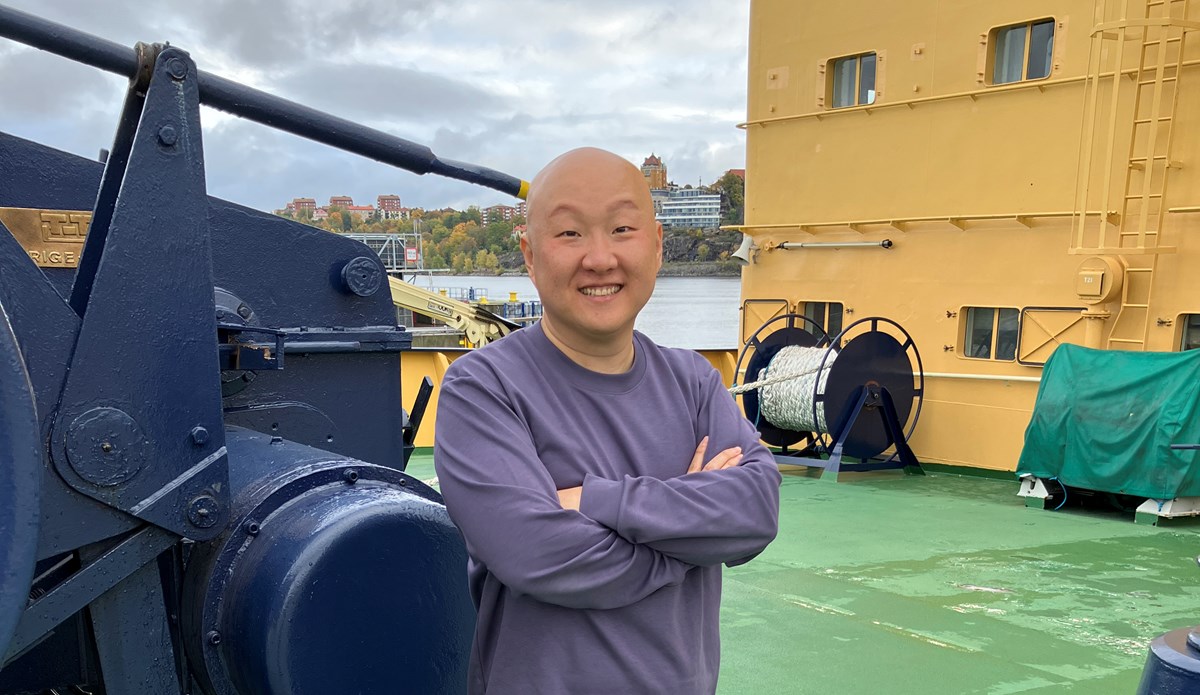
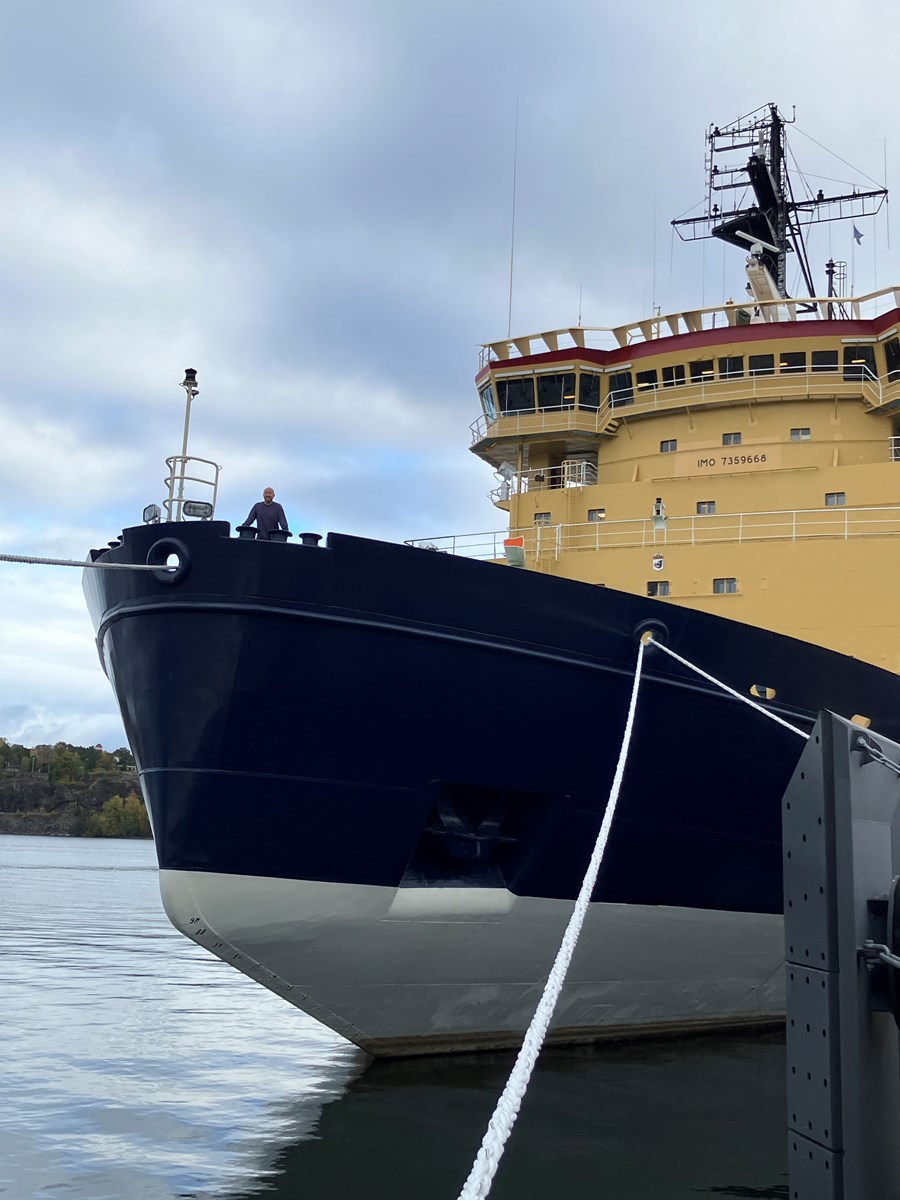
Sweden’s next icebreaker is taking shape on the drawing board in South Korea. On board Frej in Värtahamnen, Engineering Manager Deogin Kwon and his colleagues are seeking the experience that only decades of working in ice can provide.
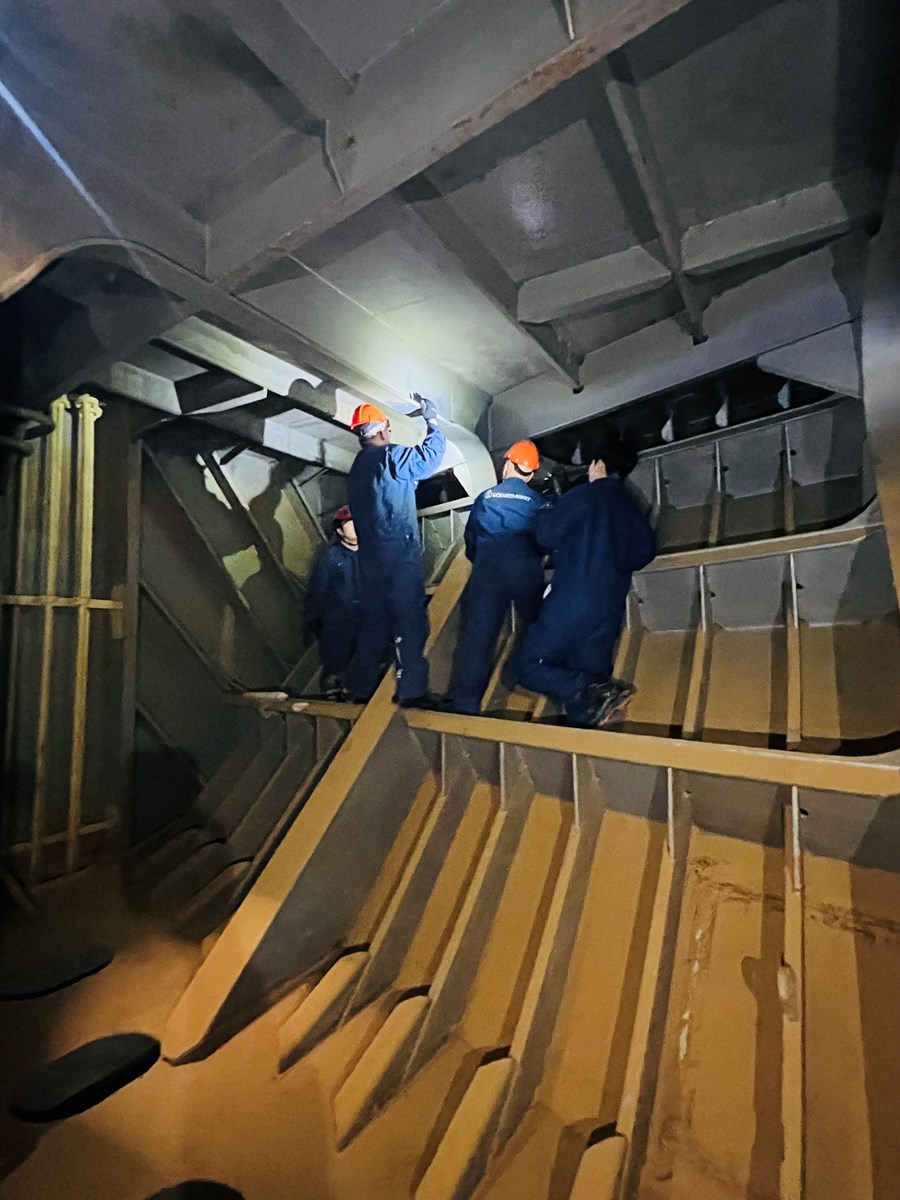
It is Deogin Kwon’s first visit to Sweden. Today, his visit has taken him to Värtahamnen in Stockholm and aboard the icebreaker Frej, where he and his colleagues from HD Hyundai Heavy Industries (HHI) are taking a closer look at everything from hull construction to interior fittings.
HHI is one of the world’s largest shipyards and has built more than 5,000 vessels over the past 50 years. Commercial vessels, naval vessels and ice-class vessels. But never an icebreaker. Now, the company has been commissioned to build the world’s most advanced icebreaker.
The project brings together HHI’s expertise in advanced ship design and the Swedish Maritime Administration’s extensive experience in icebreaking. Together, they will develop an icebreaker that builds on what has worked over the years while meeting the demands of the future.
“We can carry out calculations and analyses, but designing an icebreaker also relies heavily on experience. That is why we need to see a real icebreaker and understand how it is actually built,” says Kwon.
From the drawing board to reality
Kwon has worked at HHI for 13 years, primarily with naval vessels. He has also worked on a New Zealand vessel designed to operate in polar regions. Now, he has taken on a new role. As Engineering Manager for the Swedish icebreaker, he is responsible for coordinating the vessel’s overall design and construction.
When HHI’s engineers began working on the new icebreaker, they drew on their established working methods and the technical knowledge they had accumulated over the years. Through their collaboration with the Swedish Maritime Administration, they are also gaining a deeper understanding of the specific requirements of a vessel designed to break ice. An icebreaker is exposed to forces that most other vessels never encounter. Year after year, its hull must be able to push through the ice and withstand vibrations, impacts and stresses.
“Our engineers had prepared the drawings based on analyses and technical calculations. When we received feedback from the Swedish Maritime Administration, it was sometimes difficult for them to understand why. We lacked practical experience in icebreaking. Now that we have seen a real icebreaker, our understanding is much better,” says Kwon.
A vessel that does things differently
The more Kwon has learnt about icebreaking, the clearer it has become just how different this type of vessel is. One of the biggest surprises came not from a technical drawing, but from images shown during a presentation on Swedish icebreaking operations.
For someone who has spent much of his professional life working with other types of vessels, the images almost looked wrong.
“Normally, you do everything you can to avoid getting close to another vessel. But an icebreaker gets very close in order to help. It positions itself right alongside and can tow other vessels. I was really surprised.”
Suddenly, even features such as the large bridge windows took on a different significance. The crew needs to be able to see the ice, assess distances to other vessels and manoeuvre with great precision.
“It takes highly skilled people to operate an icebreaker,” says Kwon.
Bringing more than ten engineering disciplines together in one vessel
Meanwhile, design work is in full swing in South Korea. The project is transitioning from basic design to detailed engineering. Suppliers and equipment are to be selected, and the various technical solutions must be integrated into a fully functioning vessel.
The organisation Kwon is responsible for coordinating is far from small. More than ten engineering disciplines are involved. Naval architecture, hull construction, mechanical engineering, piping systems, electrical systems, navigation, communications, automation, ventilation and equipment are among them. A change made by one discipline can affect several others.
“We then have to negotiate with each other and find the best way forward,” says Kwon.
Every Wednesday, the engineers are therefore joined by representatives from procurement, project management, safety and quality management, among others, to review the most important issues in the icebreaker project. This type of regular meeting, bringing together so many parts of the organisation, is unusual even for HHI. But then again, so is the assignment.
“We really want to build an icebreaker of the highest possible quality.”
“We are always challengers”
There is one word Kwon returns to several times during the conversation: challenge.
Taking on something new does not seem to concern him particularly. Quite the opposite. HHI has previously taken on vessel types and projects that were new to the shipyard. It is part of the company’s culture, he says.
“We are always challengers. This time, we are going to build an icebreaker, and we are fully focused on succeeding.”
For Kwon personally, the project also means moving beyond his previous specialist perspective. As Engineering Manager, he must understand the bigger picture and bring together people with very different areas of expertise. It is a role that suits him.
“I like being proactive, and I enjoy discussing things with many different people. Now I have to understand the entire design, which means I have to study and learn a great deal. That makes me happy.”
Collaboration with the Swedish Maritime Administration is an important part of this learning process. Staff from the Swedish Maritime Administration regularly travel to Ulsan, and Kwon describes how discussions sometimes begin with different perspectives but gradually lead to shared solutions.
Next time, the ice awaits
The visit aboard Frej is not intended to be the South Korean team’s last encounter with Swedish icebreaking. The plan is for a group of HHI engineers to join icebreaking operations during an upcoming season. They will then not only study the vessel’s construction while alongside the quay, but also experience how it behaves when it encounters ice – the vibrations, impacts and forces that the designs back in South Korea will eventually need to account for.
For Kwon, several more months of drawings, calculations, discussions, tests and decisions lie ahead before construction itself can begin.
He has been through the entire journey from initial drawing to completed vessel seven or eight times before. He particularly remembers his first naval vessel. When it was completed and ready to be handed over, he was almost overcome with emotion. This time, he does not think it will be any easier. Quite the opposite.
“When I one day see our new icebreaker operating in the Baltic Sea, I might cry. Then we will be able to hug each other and say, ‘We did it!’”
He laughs.
But that day is still a long way off. Next on the agenda is a visit aboard Oden and more lessons to take back to the drawing board.